TL;DR: Yes. Buy it. Atsu is a better protagonist than Jin, the world is insane to look at, and the combat feels great once it clicks. The final act stumbles and the weapon switching is clunky early on. Still one of the best games of 2025.
Rating: 8.9/10
Ghost of Yotei is the kind of game that makes you put down whatever else you were playing.
I kept meaning to go back to other stuff. I didn’t.
Weeks in, I was still riding across Ezo at night just to see what it looked like in the rain. Still stopping mid-quest because a mountain looked good from a certain angle. Still thinking about fights from two hours ago.
It does something a lot of big games don’t bother doing anymore.
It trusts you. No minimap screaming at you. No quest markers floating in your eyeline. No cutscene explaining what you just saw. It just drops you in Ezo and lets you work it out.
That kind of respect for the player is rarer than it should be.
Okay So Here’s the Setup
You play as Atsu.
She’s a mercenary. When she was a kid, a gang called the Yotei Six showed up at her family’s home, killed everyone, and left her pinned to a burning tree to die.
She didn’t die.
Sixteen years later she’s back in Ezo — northern Japan, basically what’s now Hokkaido — with a sash that has six names on it. The whole game is her crossing them out.
That’s it. That’s the premise. And it doesn’t need to be more complicated than that.
The World First. Because It Deserves To Go First.
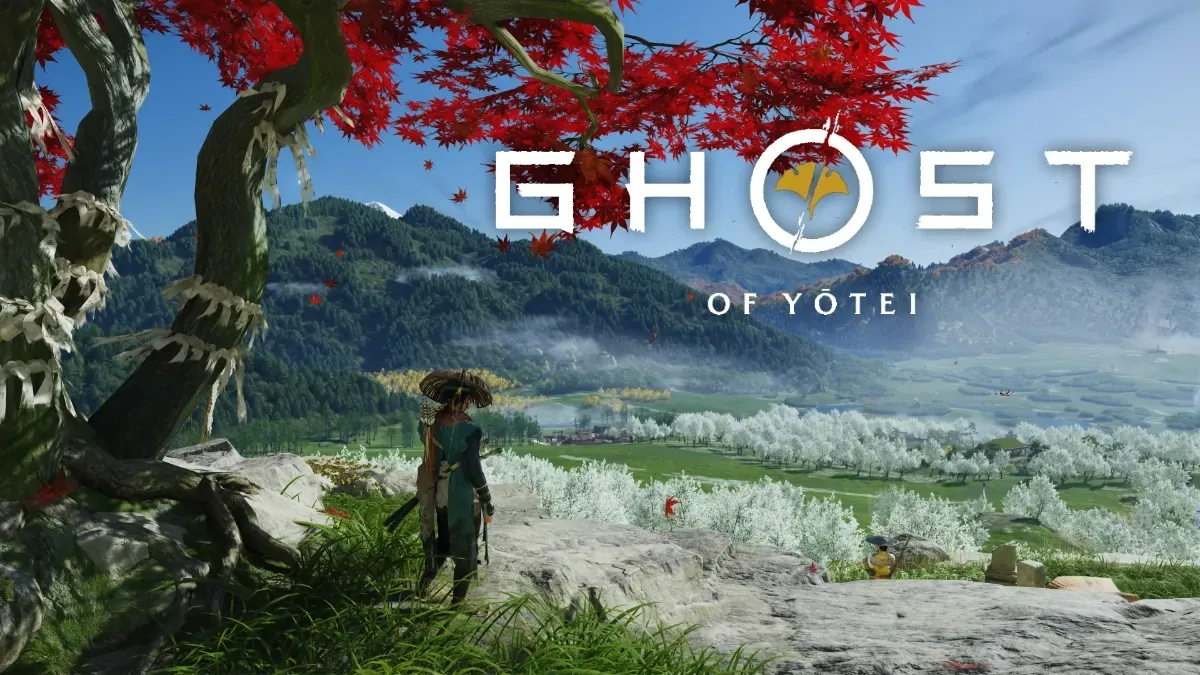
Ezo is massive. Six regions, all different vibes.
The Yotei Grasslands are wide and warm with fields of white flowers. Teshio Ridge is frozen ground and grey skies. Oshima Coast feels bleak and windswept in a way that kind of gets under your skin.
You will stop your horse mid-ride just to stare at something. Not because the game tells you to. Just because it looks like that.
The art direction goes for a painted look — think woodblock print energy rather than trying to be photorealistic. It’s a choice that works way better than screenshots can show.
Here’s the thing that makes exploring it special though.
No minimap. No floating objective marker in your face.
You swipe up on the touchpad and Atsu raises her hand. Wind blows toward your destination. That’s your compass. Follow the wind. Follow the golden birds when you see them — they lead to hidden spots. Talk to travelers on the road. Read the signposts at crossroads.
The world talks to you if you’re paying attention. And it means you spend the whole time actually looking at Ezo instead of staring at a UI layer slapped on top of it.
Oh — and Mount Yotei, the big volcano watching over everything? The art director called it a silent character. Atsu calls it “the she-mountain.” You glance up at it mid-fight and genuinely feel something. It’s a piece of geography that somehow has presence. Wild.
Atsu vs Jin — Who Actually Won?
Jin was good. But Jin was also kind of a blank slate, right? He was there so you could be the samurai. Noble, honorable, a bit beige.
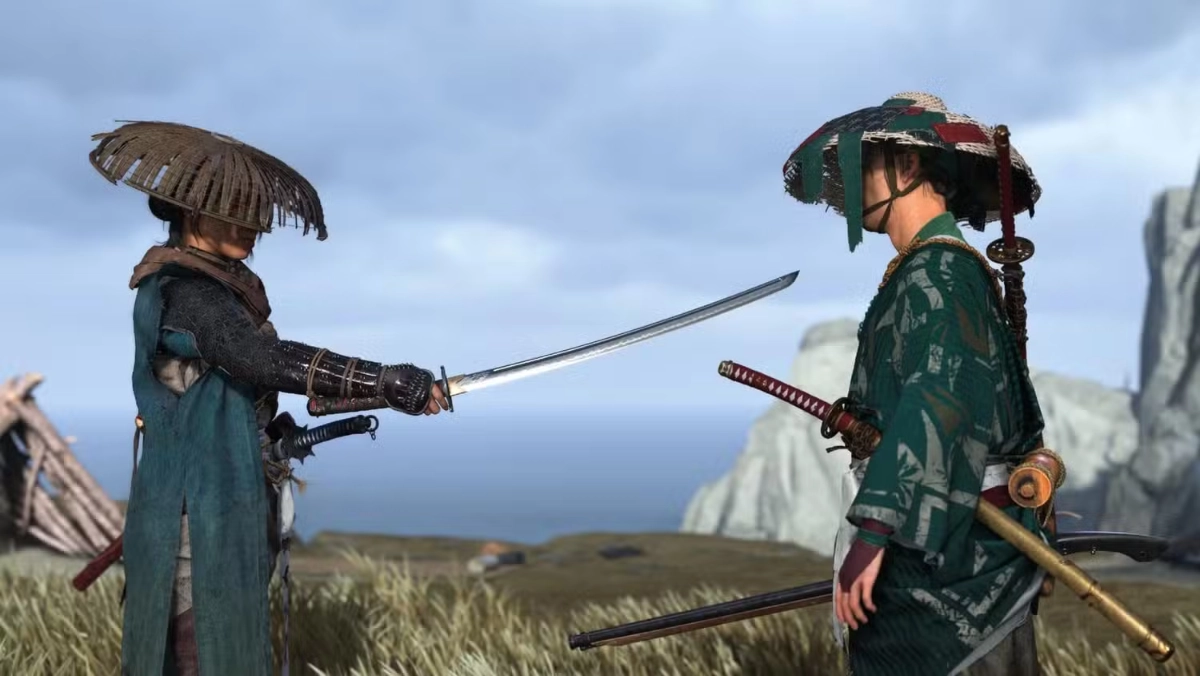
Atsu doesn’t do that. She’s already a fully built person when you meet her.
Stubborn. Dry sense of humor. Genuinely bad at being around people after sixteen years alone. She drinks too much sake — and yes, sake literally restores your spirit meter, which tells you everything you need to know about her.
But here’s what most reviews skip over.
The real thing driving Atsu isn’t revenge. It’s guilt.
She was a kid when her family died. Part of her thinks she could have stopped it. The game never lets her — or you — fully shake that. She hallucinates when she’s stressed. She locks up when people try to get close. Even when she finds her brother Jubei alive, she immediately finds ways to push him away.
It’s consistent. It’s human. It makes every kill on that sash feel like it’s about way more than payback.
The flashbacks help sell this hard. At key moments you hold the touchpad and you’re suddenly young Atsu. In her family home. Talking to her mum. Training with her dad. No loading screen, no cutscene border. You just slip into the memory and snap back out into the present with blood on your hands.
That contrast will hit you, every single time.
The Wolf Isn’t Just a Cool Mechanic
Most reviews mention the wolf and move on. But it’s doing something more interesting than just “here’s a pet.”
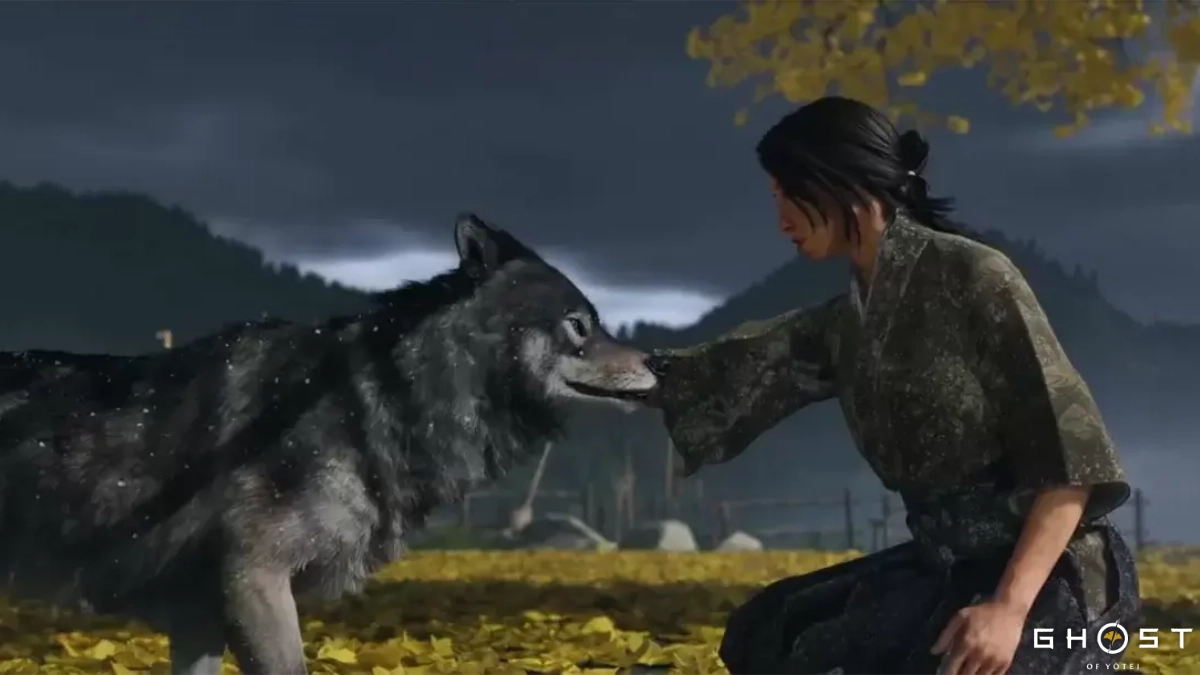
The wolf shows up early, drawn to Atsu for reasons the game doesn’t spell out right away. You find Wolf Dens across the map, help it protect its pack from Saito’s forces, and unlock a whole skill tree through it — stealth kills together, combat assists, eventually a shamisen song that summons it to you.
But the wolf mirrors Atsu in a quiet way that nobody really talks about. It’s also alone. Also hunted by the same enemy. Also protecting something it lost. There’s a moment where it just sits next to her and neither of them do anything — and that says more about where her head is than any cutscene could.
The Campfire Moments Are the Best Scenes in the Game
And almost nobody’s talking about this.
Late in the story, Atsu, Jubei, Oyuki and Kiku all sit around a fire in Oshima Coast. Jubei starts talking about their mother playing the shamisen after meals. Atsu picks it up. You write a song together.
It lasts maybe three minutes.
It hits harder than most of the boss fights.
Because you’ve spent 40-something hours watching Atsu refuse to let anyone in. And then she’s sitting around a fire, playing music with people she almost didn’t let herself care about. That’s the payoff. The game earned it slowly, quietly, without ever making a big deal of it.
That moment stuck with me way longer than any of the Yotei Six kills.
Combat — Great Once It Clicks, Awkward Before It Does
Tsushima gave you one katana and four stances. Each stance countered a different enemy type. Clean and simple.
Yotei throws out the stances and gives you a full arsenal instead:
- Katana — your baseline, solid against most things
- Dual katana — faster, destroys spearmen
- Odachi — heavy and slow, built for big armored guys
- Yari (spear) — long reach, versatile
- Kusarigama — chain-sickle, unpredictable and lethal
- Plus two bows and a gun
You unlock these through Sensei quests — weapon masters scattered across Ezo, each with their own questline that opens their full skill tree.
The core rhythm is parry-and-counter. Basic attacks get blocked with L1. Blue-glint attacks can’t be blocked — you have to parry those by timing L1 right as they land. Get it wrong, you eat damage. Get it right and there’s this crunchy metallic crack that never stops feeling satisfying.
Chain four kills without taking a hit and you trigger the Onryo Howl — Atsu screams, nearby enemies freeze in actual terror, and you carve through them while they’re still shaking.
That never gets old. Not once.
The catch: switching weapons mid-fight is clunky at first. You will fumble the wheel in messy multi-enemy fights. Some matchup logic feels weird too — why does your katana beat another katana? The rock-paper-scissors structure works but the logic doesn’t always hold up.
Give it time though. Once the full kit is unlocked and you’re comfortable, the combat is as satisfying as anything in the genre right now.
Rush archers first. Every fight. Without exception.
The Open World — Honestly Its Just My Opinion(FYI)
Look, it’s still a checklist under the hood.
White paint on climbable walls. Exploding red barrels. A chest behind that waterfall. Speed boost strips in the grass for your horse. Sucker Punch didn’t reinvent anything here.
But it’s the best version of this formula out there right now. The side content actually has real stories attached. You’re not fetching pelts. You’re running into people with actual situations, and most of them are worth your time.
Hot springs expand your max health. Altars of Reflection give skill points. Bamboo Strikes boost your spirit meter. Every collectible type has a real mechanical purpose, not just a completion tick.
The bounty system especially. Bounties have characters. Some end in ways you don’t expect. A few are genuinely funny. Sucker Punch put actual care into stuff that most open-world games treat as throwaway content.
It’s still a checklist. But every box gives you something real.
What Doesn’t Work
The final act goes exactly where you think it’s going.
The “is revenge really worth it” turn hits on schedule. Atsu’s shift from full bloodlust to emotional openness happens faster than it earns. The first two-thirds of the story are excellent. The last third is fine, but predictable.
The weapon matchup logic has gaps it never fully addresses. Some interior environments — including inns — are way too dark. And if you’re already burned out on open-world games as a genre, Yotei probably won’t save you from that. It does the formula better than almost anyone. It’s still the formula.
The Load Times Deserve Their Own Section
Fast travel is basically instant. No seriously — you go from one end of the map to the other in seconds. You never break momentum. Never stare at a black screen wondering if something crashed.
For a world this size, that’s kind of remarkable. You don’t notice it until you go back to a game that doesn’t do it. Then you really notice it.
Legends Mode — Still Going in 2026
Free update, dropped March 10, 2026.
Up to four players, four classes, co-op story missions against supernatural versions of the Yotei Six. Survival mode. Raids announced as upcoming content. It has its own gear progression, its own story, way more content than you’d expect from something that costs nothing extra.
If you played Legends in Tsushima, this is that but bigger and more polished. Good excuse to stay in Ezo long after the credits.
The Final Scores
| Category | Score |
|---|---|
| Story | 8/10 |
| Combat | 9/10 |
| World Design | 9.5/10 |
| Characters | 9/10 |
| Side Content | 8.5/10 |
| Performance | 10/10 |
| Overall | 8.9/10 |
Story gets an 8 because the first two acts are excellent and the final act is predictable. Everything that drives Atsu — the guilt, the hallucinations, the slow defrosting — is genuinely well written. The ending just goes where every revenge story goes.
Combat is a 9. The parry system feels incredible. The Onryo Howl is one of the most satisfying abilities in recent memory. Docking a point for the clunky early weapon switching and the logic gaps in the matchup system.
World Design is borderline perfect. The navigation design alone — wind, birds, travelers — puts it above almost everything else in the genre. Mount Yotei looming over everything is a masterstroke. Half a point off for interiors being weirdly dark.
Characters sit at a 9. Atsu is one of the best protagonists PlayStation has produced. Jubei is great. The Wolf Pack companions each have personality. The Yotei Six villains are mostly solid. A few feel underdeveloped compared to others.
Side Content gets an 8.5. Bounties are genuinely fun. Tales almost always have a real story. A few quests in the mid-game feel like filler but they’re the exception not the rule.
Performance is a straight 10. Instant fast travel on PS5. Stable frame rate. No meaningful bugs at launch. Sucker Punch shipped a clean game and that matters.
FAQs
Do I need to play Ghost of Tsushima first?
Nope. Yotei is completely standalone. It’s set 300 years later with a totally new story and cast. Jump straight in without missing a thing.
How long is Ghost of Yotei?
Main story runs about 25-35 hours at a moderate pace on normal difficulty. Explore properly and do side content, expect 60-80 hours. Full 100% completion with Legends will push well past that.
Is Ghost of Yotei only on PS5?
It launched as a PS5 exclusive on October 2, 2025. A PC port has been confirmed and is targeting a Q2 2026 release. No Xbox version has been announced.
Is Legends mode free?
Yes. It dropped March 10, 2026 as a free update for everyone who owns the base game. Four-player co-op, four classes, 16 story missions, Survival mode, and Raids announced as upcoming content.
Is it better than Ghost of Tsushima?
In most ways, yes. Better protagonist, more weapon variety, better pacing of side content, instant load times. The stance system from Tsushima was more intuitive than Yotei’s weapon switching, and some people genuinely prefer Jin’s story arc. But as an overall package Yotei wins.
Is Ghost of Yotei worth $70?
Yeah. Genuinely. 60-80 hours of content, a great story for most of its runtime, combat that stays fresh throughout, and one of the most beautiful open worlds in gaming right now. Plus a free co-op mode on top. Solid deal at full price.
Is there New Game Plus?
Yes. Added via patch on November 24, 2025. You keep your gear and abilities from your first run, new harder difficulty options get added, and there’s a whole new currency — Ghost Flowers — to chase for extra cosmetics and charms.
Can you be stealthy or do you have to fight everyone?
Both are fully viable. Stealth doesn’t collapse if one enemy spots you — other enemies in the same camp won’t automatically know you’re there. Thin out a group quietly then go loud for the rest. The game rewards whichever style you lean into.