TL;DR: Modern shooters got obsessed with feeling like movies. Boomer shooters stayed obsessed with feeling good to play. Turns out that second thing matters more.
By every rule modern game design follows, boomer shooters should be dead.
No story. No tutorials. No waypoints. Graphics that look like 1997 on purpose. Health that doesn’t regenerate. No cover system. No battle pass. No live service loop keeping you logging in every Tuesday.
These games break basically every rule the industry decided was non-negotiable around 2007.
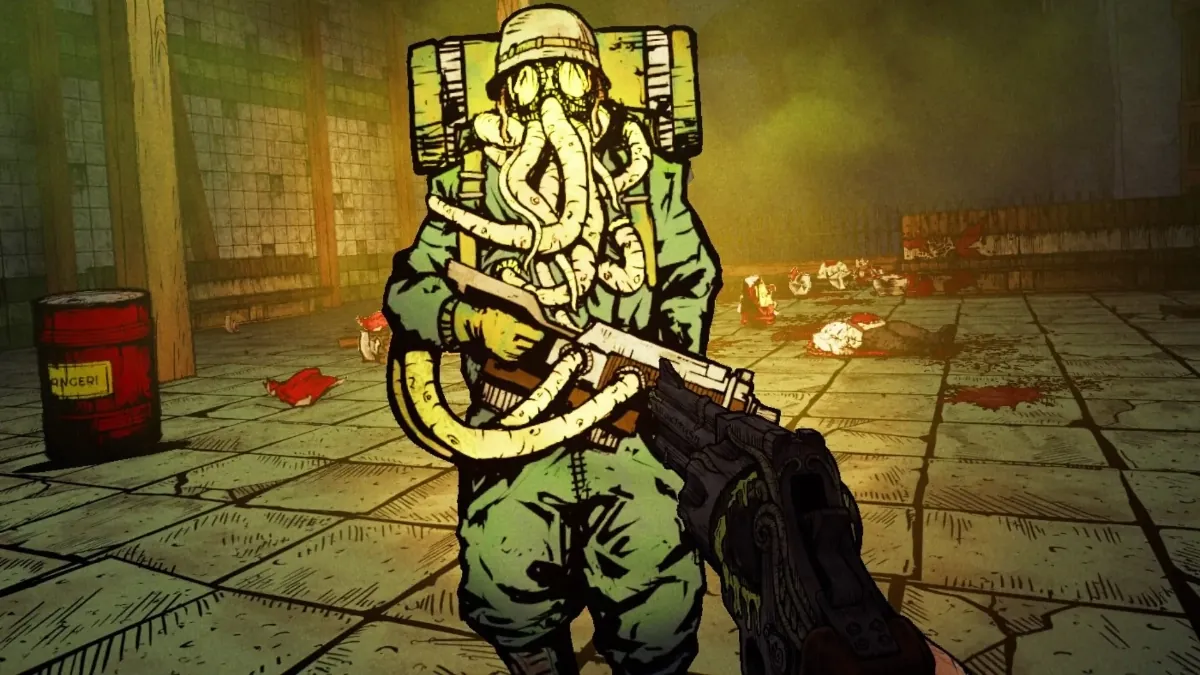
And yet here we are in 2025 — and DUSK and Ultrakill are pulling players who weren’t even alive when Quake came out.
Something is going on. Let’s actually talk about what.
Modern Games Got Scared
Call of Duty 4 came out in 2007 and sold insane numbers.
Studios looked at those numbers and started copying the formula. Not because players demanded it — because it was safer. More cinematic. Easier to put in a trailer.
Cover systems. Regenerating health. A protagonist with opinions about everything happening around him. Two weapons because more than that felt “unrealistic.”
Each change made sense in isolation. Together they turned the FPS genre into something that looked bigger and more expensive while quietly becoming less interesting to actually play.
The shooting became secondary. The game became a vehicle for a story.
What Hiding Behind a Wall Actually Does To a Game
Here’s the honest version of what regenerating health does.
It removes the cost of being bad.
Take damage, hide, wait ten seconds, you’re back to full. The fight you just fumbled? Doesn’t matter. Nothing carries forward. Every mistake evaporates the moment you find a wall to crouch behind.
That sounds like quality of life. In practice it means nothing you do has any real weight.
Boomer shooters are different. Every point of health you lose stays gone until you find a pack on the floor. Suddenly every fight has actual stakes. You’re making real decisions mid-combat — is pushing this room worth taking hits? Should I backtrack for that pack I passed? Can I afford to trade damage here?
Those decisions don’t sound exciting to describe. They make every single encounter feel like it counts.
Ten Guns Is Better Than Two
The two-weapon limit came from action movies.
The logic was that carrying two guns felt grounded and realistic. In a game. Where you’re already moving at superhuman speed through corridors of demons or whatever.
The realism argument was always backwards — but it shipped in basically every major FPS for fifteen years because it looked cleaner in trailers.
Boomer shooters say no.
You find a weapon, you keep it. By the end you’re managing a full arsenal — switching to the right tool for each situation, thinking about ammo across everything you carry, chaining weapons together in ways the game never told you to. That’s actual depth. Coming from actual systems, not cinematics.
Movement Is the Whole Thing
In cover-based shooters, movement mostly means getting from one piece of cover to the next.
In a boomer shooter, movement is the skill itself.
You’re circle-strafing while managing distance, switching weapons, watching your health, looking for the next pickup — all at the same time, constantly, at full speed. Standing still for two seconds is usually death.
That sounds exhausting. It becomes instinctive. And when it fully clicks — when you’re moving through a room and everything is just flowing and you’re not consciously thinking about any of it — nothing else in gaming feels like that.
You built something real. And now you’re seeing what it looks like.
The Nostalgia Argument Is Lazy
People write boomer shooters off as nostalgia constantly. It’s the easiest take available.
It’s also wrong.
Look at who’s actually playing Ultrakill right now. A big chunk of that playerbase has no personal memory of Quake. They’re in their twenties. Some are teenagers. They’re not feeling nostalgic for anything.
They’re playing it because it’s more fun than most of what AAA is shipping. They figured that out themselves.
The nostalgia framing is convenient because it implies the desire for this kind of game is sentimental rather than rational. If players just miss the past, you don’t have to ask why the present isn’t good enough.
But that’s not what’s happening. The things boomer shooters do well — momentum, mastery, real stakes — never stopped being good. They just went away for a while.
What DUSK Actually Proved
When DUSK came out in 2018 the response surprised a lot of people.
Small indie team. Limited budget. Deliberately retro visuals. No marketing machine. And it felt better to play than shooters made by studios with hundreds of people and budgets in the tens of millions.
Not better looking. Not better produced. Better to actually play.
Because the team understood something big studios had quietly forgotten — feel is the whole game. Not graphics, not story, not production value. The moment-to-moment sensation of moving through a space with a weapon in your hand, making decisions, building skill, going forward.
That’s what players had been missing without having words for it. DUSK showed them what was gone. The genre exploded because it turned out a huge number of people felt exactly the same way.
It sits at the top of our best boomer shooters list for exactly this reason — start there if you haven’t yet.
Ultrakill Is What Happens When You Push It Further
Ultrakill didn’t just bring the formula back. It asked what happens if you take every idea past what anyone thought was the limit.
You run on blood. To heal you absorb enemy gore at close range. Playing defensively is just slower death.
Every fight is scored D through SSS based on how stylishly you play. Surviving stops being enough — you’re performing. Chaining kills, switching weapons mid-combo, trying to look good while doing it.
Players with hundreds of hours are still finding new things. Not because content is hidden — because the systems are deep enough to keep rewarding mastery indefinitely. That’s the boomer shooter philosophy taken as far as it goes. You don’t get carried. You get good. Then you feel exactly as good as you actually are.
The Simplicity Is the Point
Boomer shooters don’t try to be everything.
No battle pass. No daily quests. No 40-hour story you have to sit through before the gameplay gets good. You load in, you shoot things, you move forward. That’s it.
In a time when most big games feel like a second job — maintenance, dailies, season content, events designed around FOMO — a game that just is what it is from the moment you boot it up feels almost radical.
The simplicity isn’t a limitation from a different era. It’s a choice. A deliberate one. And a good one.
Where It’s Going
The boomer shooter revival isn’t stuck looking backward.
Selaco is the clearest sign of where things are heading — boomer shooter movement and combat, proper enemy AI that actually adapts to you, real production values. Using the old formula as a foundation to build something genuinely new rather than just recreating the past with better hardware.
The best boomer shooters right now aren’t interesting because they feel old. They’re interesting because they figured out what the old games got right — and kept that part, while letting everything else evolve.
FAQ
Why are boomer shooters popular again? Modern FPS games chased cinematic presentation and gradually removed the things that made shooters fun to play — movement skill, real health stakes, weapon variety. Boomer shooters kept all of that. Players noticed eventually.
Are boomer shooters just nostalgia? No. A large part of the current playerbase for games like Ultrakill has no personal connection to 90s shooters. They’re playing them because they’re genuinely more fun than most modern alternatives — not out of sentiment.
What did modern shooters get wrong? Regenerating health removed stakes. Two-weapon limits removed strategic depth. Cover systems killed movement skill. Each change made individual sense. Together they made the genre less interesting to actually play.
Is the boomer shooter genre still growing? Yes — new quality releases have increased every year since DUSK in 2018. Selaco, Cultic Chapter 2, and others from 2024-2025 show the genre getting more ambitious, not less.
What’s the best boomer shooter to start with? DUSK. Captures everything the genre does well without overwhelming you upfront. After that, the best boomer shooters list covers exactly where to go next.