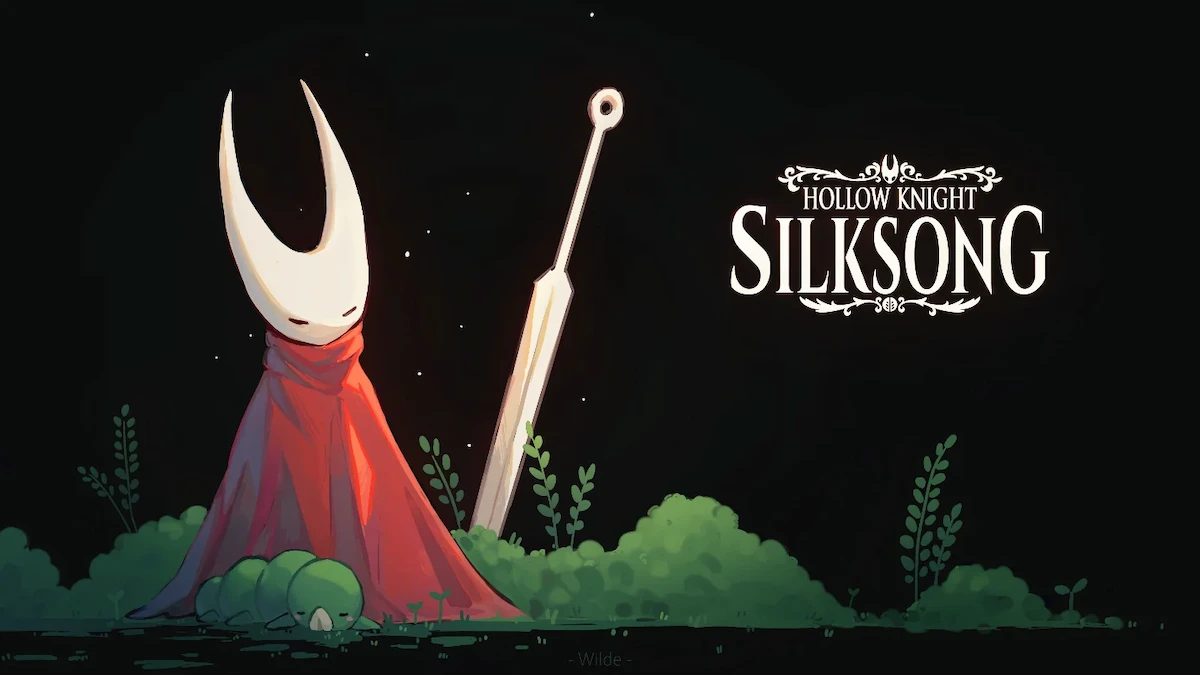
TL;DR: Yes. It was worth it. Silksong is bigger, faster, harder, and in some ways stranger than Hollow Knight. It will absolutely destroy newcomers and it knows that. But if you loved the first game — or even just respected it — Pharloom is somewhere you need to go.
Rating: 9/10
There was a YouTube channel called Daily Silksong News.
It uploaded every single day for over four years. Almost every episode was the same script — “Today is [date]. There is no news to report for Silksong today.” One thousand six hundred and ninety-three episodes. Forty-eight had actual news.
That is the level of waiting we are talking about.
And on September 4, 2025 — the Steam store buckled. The Nintendo eShop buckled. Hundreds of thousands of people tried to buy the same game at the exact same moment and the servers just gave up for a while.
That’s not normal for a $19.99 indie game from a two-person studio.
Nothing about Silksong is normal.
You’re Not the Knight Anymore
The biggest shift in Silksong isn’t the new world or the new enemies or the expanded systems.
It’s that Hornet talks.
The Knight from Hollow Knight was silent. A blank vessel you projected onto. Hornet is a character. She has opinions about the things happening around her. She’s stoic and sharp and occasionally, quietly funny. She has history with Hallownest that weighs on her in ways the game doesn’t always spell out.
That changes everything about how the story feels.
Pharloom — the new kingdom you’re climbing through — is more populated than Hallownest was. More people alive. More characters with actual stories. And because Hornet responds to them, those stories land differently than they would through the silent Knight’s eyes.
The goal is simple enough on paper. Hornet gets kidnapped. Escapes. Climbs toward the Citadel at the top of Pharloom to find out who took her and why. What she finds along the way is the part the game earns over 30 hours.
Pharloom Is Massive. Sometimes Overwhelmingly So.
Hollow Knight’s Hallownest was big. Pharloom is bigger.
Coral forests. Mossy grottos. A volcanic wasteland. Gilded cities. Misty moors. Each area has its own look, its own enemy types, its own atmosphere — and they all connect in ways that reward getting genuinely lost.
The world is built vertically more than horizontally. You’re always climbing toward something. The map splits into dozens of branching paths and two players can finish the same game having discovered completely different areas in completely different orders. Someone finished a major section of The Citadel in under 10 hours. Another reviewer didn’t find it until 35.
That’s not a flaw. That’s the design.
There’s a fast travel system called the Bellway and a map seller named Shakra who you’ll be very grateful for. The game doesn’t hold your hand about where to go, but it gives you just enough tools to feel capable of figuring it out yourself.
Over 200 enemies. More than 40 bosses. Nearly 100 benches.
The scope of it is genuinely absurd for a team this small.
Hornet Plays Completely Different
Forget the Knight’s slow, deliberate poke.
Hornet is fast. Acrobatic. Her needle strikes are quick and combo-friendly. She can diagonal pogo. Float downward slowly. Parry — there’s a hidden parry mechanic the game never directly teaches you, which is very Team Cherry of them.

The Crest system replaces Hollow Knight’s charms but goes further — Crests are color-coded into offensive, defensive, and quality-of-life slots. You can’t just stack whatever you want anymore. Early on you’re forced to choose between a Crest that makes enemies drop more currency or one that collects it automatically — same slot, can’t have both. Those trade-offs matter.
There are also Silk Skills unlocked at Weaver sites throughout Pharloom, which expand Hornet’s combat and movement in ways that make later areas feel completely different from earlier ones.
The combat has a much higher skill ceiling than the first game. If you learned to play Hollow Knight and think that prepared you for Silksong — it prepared you for about the first two hours. After that, Pharloom starts testing things the first game never asked for.
It Is Harder Than Hollow Knight. Significantly.
Right out of the opening area, Silksong is testing you.
Regular enemies deal heavy damage. Bosses are faster and more aggressive than anything in Hollow Knight. Some arenas have long return paths after death — the boss Groal the Great in Bilewater has a runback that will genuinely make you consider quitting, and you won’t be the only one.
Team Cherry patched two early bosses after launch, slightly nerfing them. Later-game bosses were left alone.
The resource systems add another layer of stress. Rosary beads — the main currency — drop slowly and get spent fast. Prices at merchants climb quickly. Shell Shards for repairing tools feel like they’re always one enemy drop away from running out. Some players found this exhausting. Others found it made every item pickup feel meaningful.
The honest take — if you bounced off Hollow Knight’s difficulty, Silksong will be harder.
If you ran the Pantheons in Hollow Knight, you’ll feel at home here eventually. The first three hours might still humble you.
The Bosses Are the Best in the Series
For all the complaints about difficulty — the bosses are extraordinary.
Each one tests something specific. Some are aerial gauntlets. Some force relentless offense. Some require you to read patterns under pressure while also managing positioning and Hornet’s full toolkit at the same time.
Winning a boss fight that destroyed you ten times feels like something you earned. Not something the game handed you.
There are multiple credit rolls — finishing the game once opens up things you didn’t know existed. Finishing it a second time opens up more. If you want to see everything Silksong has — every boss, every secret, every story thread — budget around 70 hours. That’s not the length of the main story. That’s full completion.
The main story runs about 15-30 hours depending on how much you explore and how often the bosses stop you.
Christopher Larkin Did It Again
The Hollow Knight soundtrack is one of the most recognized in indie gaming.
Silksong’s might be better.
Larkin’s score shifts with every area — quiet and melancholic during exploration, then swelling into full orchestral force the moment a boss fight begins. The music isn’t background noise. It’s information. The way a track builds tells you something about what you’re about to face.
The sound design is equally sharp. Hornet’s needle has a distinct crack. Her silk has a hiss. Enemy attacks telegraph audibly in ways that matter when the screen gets busy.
The game runs smoothly on everything. No major technical issues at launch beyond the storefronts collapsing under traffic, which wasn’t the game’s fault.
What Doesn’t Quite Land
The resource grind.
Rosary beads and Shell Shards are the two currencies running through everything — abilities, repairs, merchants, bench upgrades. The balance feels slightly off in the mid-game. Drops are too low for how fast prices climb. There were stretches where progression felt gated behind farming runs rather than skill.
The early boss difficulty will genuinely push some players out the door before the game opens up. Team Cherry balanced Silksong for players who spent time in the Pantheons. That’s a specific audience. If you’re not in it, the first few hours can feel punishing in a way that doesn’t feel fair yet.
And some boss runbacks are too long. One or two of them are genuinely frustrating in a way that isn’t satisfying — just annoying.
None of these are dealbreakers. But they’re real, and the 93% Steam rating means most people either didn’t notice or didn’t mind.
So Was Seven Years Worth It?
Yeah.
Silksong is one of the best Metroidvanias ever made. It’s bigger and harder and more ambitious than Hollow Knight in almost every way. Hornet is a better protagonist than the Knight. Pharloom is a better-realized world than Hallownest. The bosses are the best in the series. The music is extraordinary.
The resource system needs a little more balancing. The early difficulty curve will lose some players. A couple of runbacks are too long.
But this is a $19.99 game with 40+ bosses, 200+ enemies, a world that takes 70 hours to fully explore, and a story that actually surprised me in the final chapter.
Team Cherry took seven years. They could have kept going. They forced themselves to stop and ship.
The wait was a meme. The game is real. The game is genuinely great.
9/10
FAQ
Is Hollow Knight: Silksong worth playing? Yes — it’s one of the best Metroidvanias released in 2025 and one of the best in the genre overall. The difficulty is higher than the first game and the resource systems need some patience, but the bosses, world design, and music are exceptional.
Do I need to play Hollow Knight before Silksong? Yes. Silksong openly spoils Hollow Knight’s story at several points and assumes you know who Hornet is. You can technically play it without the first game but you’ll lose a significant amount of context and emotional impact.
How long is Hollow Knight: Silksong? The main story takes roughly 15-30 hours depending on how much you explore and how long bosses stop you. 100% completion runs around 70 hours.
Is Silksong harder than Hollow Knight? Significantly. Regular enemies deal more damage, bosses are more aggressive, and the early game is unforgiving for players coming from the first game. Team Cherry patched two early bosses after launch but the overall difficulty remains high.
What platforms is Silksong on? PC, PS4, PS5, Nintendo Switch, Nintendo Switch 2, Xbox One, and Xbox Series X/S. It was also a day one Xbox Game Pass title on release.
How much does Hollow Knight: Silksong cost? $19.99. Given the amount of content — 40+ bosses, 200+ enemies, 70 hours of completion content — it’s one of the best value games released in 2025.